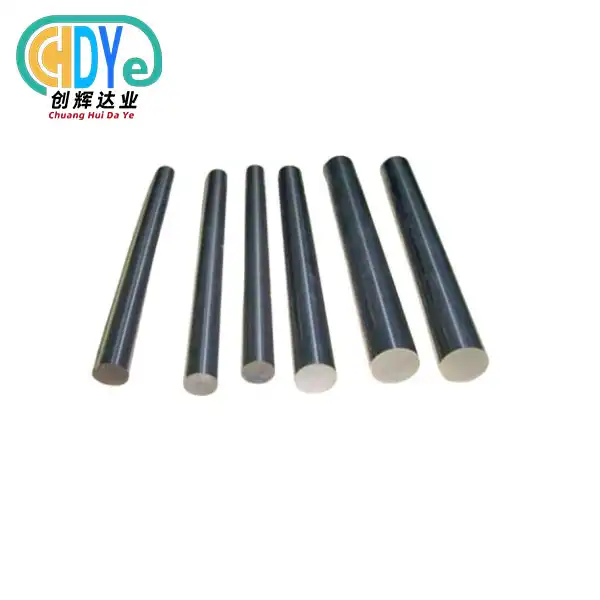
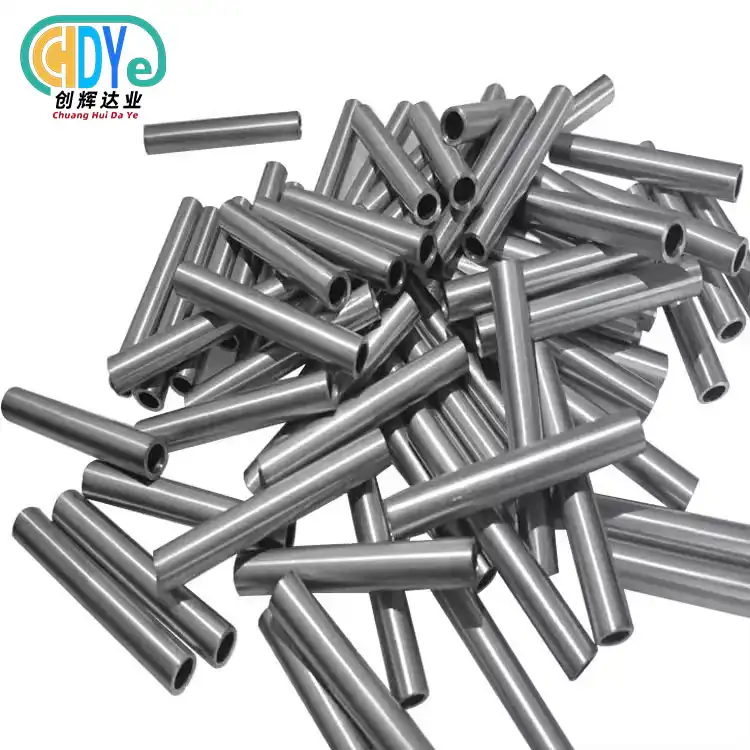
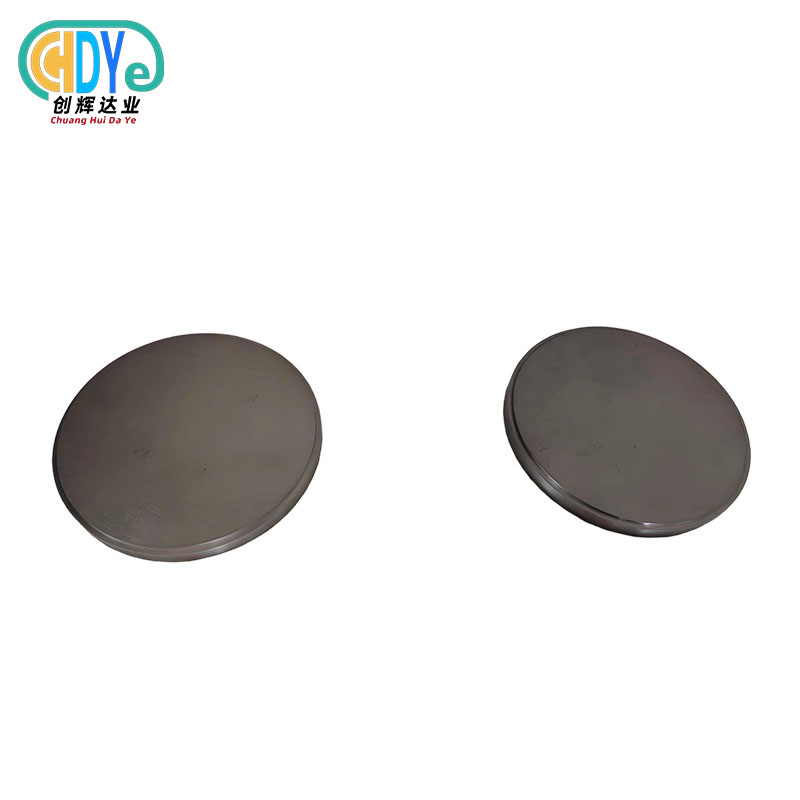
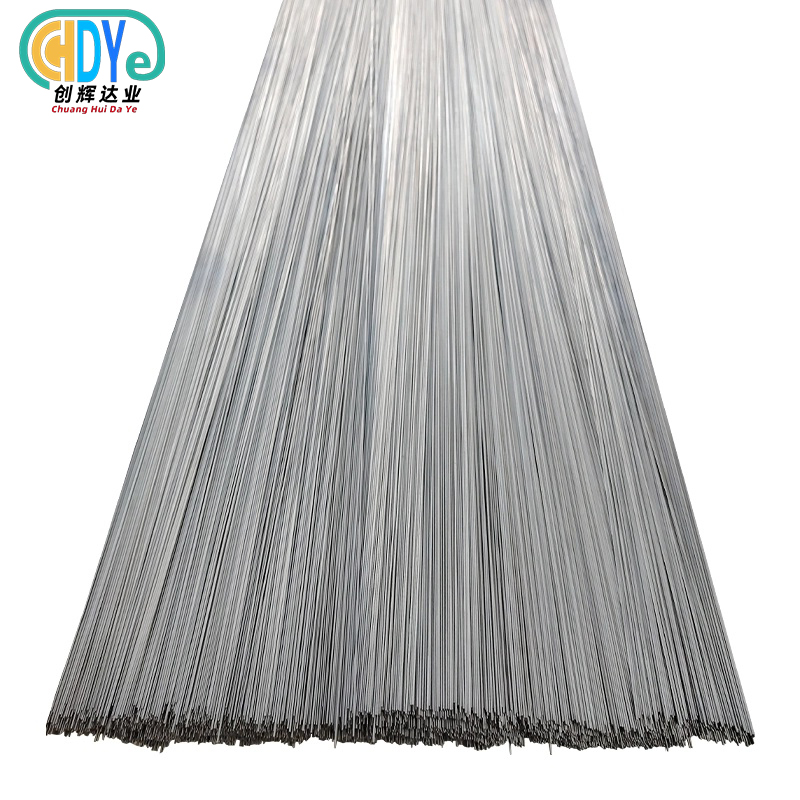
It is necessary to be familiar with two important standards in order to comprehend the specifications of niobium round bars. These standards are ASTM B392 and UNS R04200. A thorough set of criteria for niobium and niobium alloy bar materials is established by ASTM B392. These recommendations address the chemical composition, mechanical properties, and dimensional tolerances of their respective materials. Niobium that is pure and has a minimum purity of 99.95% is designated by the UNS R04200 standard. This ensures that it performs very well in applications including aerospace, chemical processing, and electronics. Through their collaborative efforts, these standards ensure that a wide range of industrial applications are subject to consistent quality and reliable performance.

Understanding ASTM B392 Standard Requirements
A specification known as ASTM B392 is considered to be the foundational standard for the manufacturing and quality control of niobium rods. With the help of this standard, exact chemical composition limitations, mechanical property requirements, and manufacturing tolerances are defined. These components work together to provide consistent performance across all applications.
The standard contains a variety of grades of niobium materials, with RO4200 and RO4210 being the most frequently mentioned grades. Among the requirements for chemical composition is a minimum niobium concentration of 99.95%, as well as stringent restrictions on impurities such as oxygen, carbon, nitrogen, and hydrogen. Due to the presence of these impurity controls, the ductility, weldability, and corrosion resistance qualities of the material are directly affected.
Specific annealing techniques, surface polish standards, and dimensional tolerances are some of the requirements that are outlined in ASTM B392 for manufacturing. Within their cross-section, bars are required to have a grain structure that is consistent throughout. This can be accomplished by the use of controlled hot working and heat treatment methods. The standards for surface finish ensure that surfaces are smooth and free of defects, making them appropriate for precision machining and other challenging applications.
Some of the testing procedures that are required by the standard are the verification of tensile strength, the investigation of chemical composition, and the ultrasonic inspection for defects on the inside. The standards for documentation provide complete traceability, beginning with the sourcing of raw materials and continuing through the final inspection, thereby providing consumers with thorough quality assurance.
UNS R04200 Grade Specifications and Properties
Niobium round bar that is commercially pure and possesses remarkable material qualities, such as those that make it acceptable for demanding industrial applications, is designated by the UNS R04200 designation. The niobium purity of this grade is maintained at a minimum of 99.95%, and it offers exceptional resistance to corrosion and thermal stability.
UNS R04200 possesses a number of physical qualities, such as a melting point of 2,477 degrees Celsius, a density of 8.57 grams per cubic centimeter, and remarkable ductility that makes it possible to perform complex shaping operations. Due to the fact that the material possesses exceptional superconducting capabilities at cryogenic temperatures, it is an extremely desirable material for use in advanced electrical and magnetic applications.
The annealed condition is characterized by mechanical qualities such as a typical tensile strength that falls within the range of 275-415 MPa, and elongation values that remain greater than 25%. Due to the fact that these qualities offer a perfect mix of strength and formability, it is possible to fabricate the material into intricate geometries while preserving its structural integrity.
The corrosion resistance qualities of UNS R04200 make it an especially valuable material for use in situations that involve chemical processing. When compared to traditional materials, the material exhibits outstanding resistance to the majority of acids, alkalis, and organic chemicals at elevated temperatures, which greatly extends the service life of the material.
Manufacturing Processes and Quality Control
To make niobium metal bars professionally, you need to use complex working methods and strict quality control measures. The first step in the production process is choosing high-purity niobium ingots. Next, they are vacuum-melted to get rid of any remaining impurities and make sure the makeup is uniform.
Controlled forging and rolling are examples of hot working techniques that create the desired grain structure while keeping the dimensions accurate. It is very important to keep the temperature under control during these steps, since too much heat can cause grains to grow and mechanical qualities to decrease.
Precision machining processes get the final size and finish of the surface that is needed. Modern CNC machines can hold very tight tolerances, lose very little material, and make sure that the quality is the same from one production run to the next. Surface finishing gets rid of any marks left over from machining and leaves a smooth surface that is needed for important uses.
Heat treatment methods improve mechanical properties and remove stress that was left over from the forming process. Vacuum annealing at controlled temperatures makes sure that the qualities are the same across the whole bar and stops the surface from rusting.
Comprehensive chemical analysis using advanced spectroscopic methods, mechanical property verification through standard testing, and dimensional inspection using high-precision measuring tools are all examples of quality control measures. Each production lot is given its own certificate showing that it meets certain standards.
Industrial Applications Across Key Sectors
Niobium alloy parts are used in high-temperature structures, rocket nozzles, and superconducting magnetic systems in the aerospace and military industries. Because the material is very stable at high temperatures and doesn't rust, it's perfect for use in harsh environments like those found in space research and defense systems.
Niobium round bar is used to make corrosion-resistant equipment like heat exchangers, reaction tanks, and piping systems that are used in chemical and petrochemical processing plants. Because the material is resistant to harsh chemicals and high temperatures, it saves a lot on maintenance costs and makes tools last longer.
Sputtering targets, electronic links, and specialized tools are all used in electronics and semiconductor manufacturing. Niobium wire and sheet products can be made with very high levels of purity, which meet the strict contamination standards of modern semiconductor processing equipment.
Medical device makers use niobium materials to make implants and surgical tools that are biocompatible. Because the material is biocompatible and doesn't corrode in biological settings, it can be used for long-term implantable devices.
For experiments and making prototypes, research centers and universities need high-purity materials that can be made in small amounts. Custom machining lets you make geometries that are specifically needed for study purposes.
Selection Criteria and Technical Considerations
To choose the right niobium sheet specifications, you need to carefully think about the needs of the product, the operating conditions, and the performance goals. Temperature exposure, chemical surroundings, and mechanical loading conditions all have a direct effect on the choice of material.
Purity levels are very different depending on the purpose. For example, electronics and semiconductors need the purest levels. Standard business grades are usually 99.95% pure, but for specific uses, ultra-high purity grades that reach 99.99% are available.
Dimensional tolerances and surface finish standards depend on what the part will be used for and how it will be processed afterward. For precision applications, tolerances must be tighter, and surface finishes must be better. For structural applications, standard industrial tolerances may be fine.
Some things to think about when choosing a delivery form are normal round bar stock, precision-ground bars, or custom-machined parts. Standard forms are cheaper for uses that don't need much extra processing, while custom fabrication lets you make shapes that work best for certain uses.
Different industries have different certification needs. For example, aerospace and medical uses usually need more testing and documentation. Having ISO 9001:2015 certification makes sure that quality control remains the same during the whole manufacturing process.
Market Trends and Procurement Strategies
The way the global niobium market changes affects the prices, availability, and shipping times for round bar products. Understanding market trends helps you plan your purchases and keep track of your costs better.
Some things to think about in the supply chain are where to get raw materials, how much you can make, and how to get your products to customers in different areas. Supply security and availability are improved by having established sources with a wide range of sourcing options.
Processing and manufacturing methods are always getting better, which means more uses and lower costs. Modern technologies for heating metals and precise tools for making things make it possible to make better materials at reasonable prices.
Partnering with qualified suppliers for a long time can give you benefits like better prices, faster service when supplies are low, and the chance to work together on making unique goods. For complicated applications that need engineering help, technical support skills become more and more important.
Quality assurance programs should check a supplier's certification compliance, testing facilities, and methods for keeping track of products. Regular checks and performance reviews make sure that changing requirements are always being met.
Conclusion
Understanding the ASTM B392 and UNS R04200 standards is important for getting and using niobium round bars correctly. These standards make sure that the quality is always the same, that the performance is reliable, and that the right materials are used in a wide range of industry settings. The success of a project depends on working with qualified suppliers who show they fully understand these standards, keep the right certifications, and offer full technical help. When you put together better material properties, tried-and-true manufacturing methods, and expert technical advice, you get the best solutions for tough uses that need top-notch performance and dependability.
Partner with Chuanghui Daye for Premium Niobium Round Bar Solutions
Shaanxi Chuanghui Daye delivers exceptional niobium round bar products meeting ASTM B392 and UNS R04200 standards with guaranteed quality and competitive factory-direct pricing. Our ISO 9001:2015 certified manufacturing facility in China's Titanium Capital provides advanced processing capabilities and comprehensive technical support. Whether you need standard bars or custom machined components, our experienced team ensures fast delivery and reliable supply for your critical projects. Contact us at info@chdymetal.com today.
References
1. ASTM International. "Standard Specification for Niobium and Niobium Alloy Ingots." ASTM B392-95, 2019.
2. Unified Numbering System for Metals and Alloys. "UNS R04200: Commercially Pure Niobium." Society of Automotive Engineers, 2021.
3. Davis, Joseph R. "ASM Specialty Handbook: Heat-Resistant Materials." ASM International, 2020.
4. Cardonne, Susan M. "Niobium and Niobium Compounds." Kirk-Othmer Encyclopedia of Chemical Technology, 2018.
5. International Organization for Standardization. "Quality Management Systems for Aerospace Applications." ISO 9001:2015, 2022.
6. Miller, James E. "Advanced Materials for High-Temperature Applications." Materials Science and Engineering Review, 2023.