- English
- French
- German
- Portuguese
- Spanish
- Russian
- Japanese
- Korean
- Arabic
- Greek
- German
- Turkish
- Italian
- Danish
- Romanian
- Indonesian
- Czech
- Afrikaans
- Swedish
- Polish
- Basque
- Catalan
- Esperanto
- Hindi
- Lao
- Albanian
- Amharic
- Armenian
- Azerbaijani
- Belarusian
- Bengali
- Bosnian
- Bulgarian
- Cebuano
- Chichewa
- Corsican
- Croatian
- Dutch
- Estonian
- Filipino
- Finnish
- Frisian
- Galician
- Georgian
- Gujarati
- Haitian
- Hausa
- Hawaiian
- Hebrew
- Hmong
- Hungarian
- Icelandic
- Igbo
- Javanese
- Kannada
- Kazakh
- Khmer
- Kurdish
- Kyrgyz
- Latin
- Latvian
- Lithuanian
- Luxembou..
- Macedonian
- Malagasy
- Malay
- Malayalam
- Maltese
- Maori
- Marathi
- Mongolian
- Burmese
- Nepali
- Norwegian
- Pashto
- Persian
- Punjabi
- Serbian
- Sesotho
- Sinhala
- Slovak
- Slovenian
- Somali
- Samoan
- Scots Gaelic
- Shona
- Sindhi
- Sundanese
- Swahili
- Tajik
- Tamil
- Telugu
- Thai
- Ukrainian
- Urdu
- Uzbek
- Vietnamese
- Welsh
- Xhosa
- Yiddish
- Yoruba
- Zulu
How to Choose Titanium Alloy Wire for Your Project?
Selecting titanium alloy wire for your project entails considering mechanical qualities, application needs, and supplier capabilities. Understanding your operational environment, aligning alloy grades to performance specifications, and working with authorized manufacturers with detailed technical documentation are crucial. Quality titanium wire has high strength-to-weight ratios and corrosion resistance, making material selection crucial for aeronautical, medical, and industrial projects.
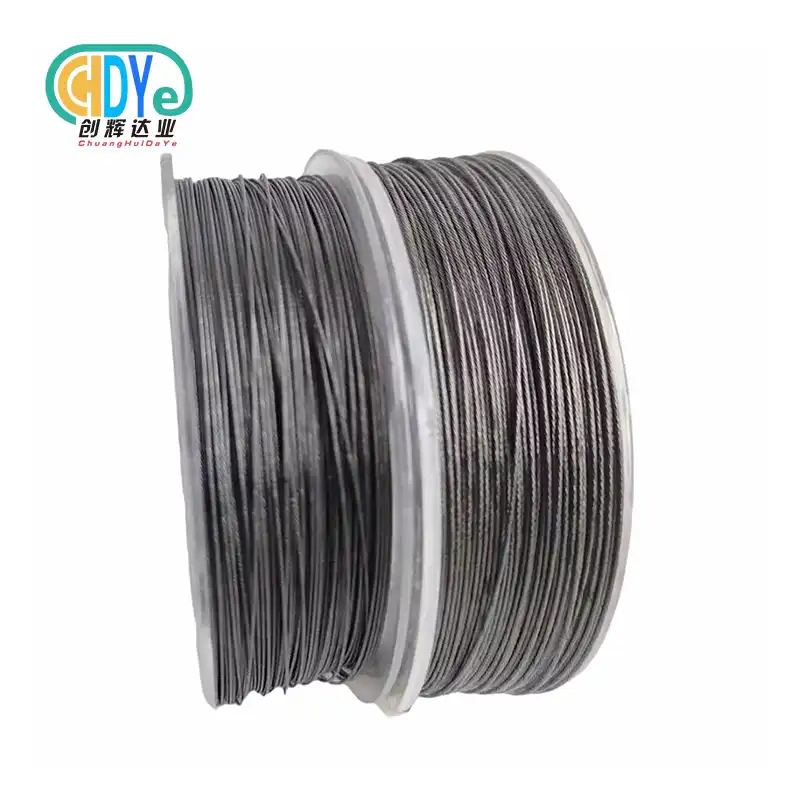
Understanding Titanium Alloy Wire and Its Key Characteristics
One of the most advanced metal products in modern manufacturing, titanium alloy wire combines the benefits of pure titanium with precision alloying to improve mechanical qualities. These titanium wires with aluminum, vanadium, molybdenum, and niobium perform well in harsh industrial conditions.
Fundamental Properties and Composition
The crystalline structure and absolutely overseen combination composition of titanium wire give it exceptional properties. Review 5 (Ti-6Al-4V) is the most well-known titanium combination since it equates quality, ductility, and erosion resistance. Therapeutic amalgams like Ti-6Al-7Nb are vanadium-free, making inserts biocompatible. Mechanical characteristics shift by amalgam review to meet working circumstances and execution needs.
Modern titanium wire has pliable qualities from 240 MPa for commercially unadulterated grades to over 1,100 MPa for high-strength combinations. The fabric is reasonable for cryogenic and extraordinary temperature applications since it has unfaltering mechanical behavior from -250°C to +400°C. Non-magnetic characteristics and prevalent weariness resistance beneath cyclic stacking increase its application potential.
Manufacturing Excellence and Quality Standards
Master makers utilize vacuum arc remelting (VAR) and electron bar dissolving to get ultra-low incorporation levels and homogenous microstructures. Utilizing exactness passes on for multi-pass wire drawing guarantees ±0.01 mm dimensional exactness, whereas middle vacuum toughening optimizes ductility and diminishes inside pressures. Surface medicines progress welding execution and electrical conductivity with mirror-polished, oxide-free coatings.
ASTM B863, AMS 4954, and ISO 9001:2015 certifications ensure fabric characteristics and traceability. These guidelines set chemical composition confinements, mechanical property criteria, and wire execution testing techniques for different applications.
Comparing Titanium Alloy Wire with Alternative Materials
Understanding how titanium wire compares to other materials helps make performance and cost-based procurement decisions. Key factors affecting material selection across industrial applications are compared in this investigation.
Performance Comparison with Conventional Metals
In spite of its erosion resistance and decreased fetch, stainless steel wire cannot coordinate with the titanium alloys' strength-to-weight proportion and chemical resistance. Titanium wire stands up to seawater erosion way better than stainless steel, which pits and splits. Titanium's 4.5 g/cm³ thickness offers focal points over steel's 7.9 g/cm³ in aeronautical applications, making weight concerns crucial.
Nickel-based combinations work well at high temperatures but need biocompatibility for restorative utilize. Non-toxic titanium wire is basic for surgical inserts and restorative hardware due to osseointegration. In electrical and accuracy instrumented applications, titanium's non-magnetic characteristics kill obstructions.
Pure Titanium versus Titanium Alloys
Unadulterated titanium wire (Grades 1-4) is corrosion-resistant and formable but weaker than alloyed grades. Immaculate titanium's ductility benefits commercial, profound drawing, and troublesome forming applications. In any case, basic applications requiring tall strength-to-weight proportions require alloyed grades with ductile qualities of 1,000 MPa.
Controlled warm treatment customizes the titanium combination's mechanical characteristics. Alpha-beta combinations like Ti-6Al-4V benefit from age medications that increment quality and hardness, while keeping ductility for fabricating.
Key Criteria for Selecting the Right Titanium Alloy Wire for Your Project
Systematic evaluation of operational requirements against alloy properties is needed for material selection. A thorough review enables optimal performance while managing project budgets and delivery dates.
Mechanical Property Requirements
Commercially immaculate combinations are satisfactory for 240-550 MPa malleable quality, but airplane components may require amalgams past 1,000 MPa. CYCLIC stacking applications like springs and clamps depend on wear resistance for long life. Fabric choice for gas turbine and chemical preparation hardware depends on crawl resistance at high temperatures.
Formability and quality must be adjusted for ductility. Due to delayed cold working amid gadget fabrication, therapeutic wire amalgams must keep up prolongation. Due to work solidifying amid drawing, smaller wire distances across have higher ductile qualities.
Environmental Resistance Considerations
Application erosion resistance necessities extend from surrounding introduction to unforgiving chemical conditions. Titanium's resistance to chloride-induced erosion benefits marine applications, but chemical handling hardware may require palladium or ruthenium combinations to stand up to decreasing acids.
Mechanical characteristics and erosion resistance depend on temperature stability. Solid combinations that stand up to oxidation and alpha-case arrangement are required for high-temperature applications. To work securely, cryogenic materials must avoid fragile break at amazingly low temperatures while maintaining ductility.
Economic and Supply Chain Factors
Fabric costs must incorporate introductory buy and lifecycle value. Titanium wire is more costly than other materials, but its erosion resistance decreases support and amplifies the benefit of life. Provider capacity evaluation is basic for obtaining victory since the least arranged amounts and lead times influence venture scheduling.
Custom combination specs may increment lead times but maximize execution for interesting applications. For commercial applications, standard grades like Ti-6Al-4V decrease supply chain dangers with shorter conveyance dates and more providers.
Procuring Titanium Alloy Wire: Best Practices for B2B Buyers
Strategic titanium wire buying needs supplier evaluation and precise specifications. Technical and commercial needs must be balanced by professional buyers to ensure quality and delivery reliability.
Supplier Qualification and Assessment
Suppliers with industry qualifications, quality management systems, and similar application customer references exhibit technical expertise. ISO 9001:2015 certifies systematic quality control, while AS9100 certifies advanced quality management. Raw material sourcing to final inspection and testing should be covered by manufacturing.
Professional suppliers offer technical help, unlike commodity merchants. Metallurgical expertise, application engineering support, and custom alloy creation maximize material solutions for difficult applications. Suppliers should offer chemical, mechanical, and microstructural test data.
Specification Development and Quality Assurance
Unambiguous technical standards ensure material property consistency. Specifications should include alloy grade, dimensional tolerances, surface finish, and standards. Mechanical property criteria must contain minimum tensile, yield, and elongation values, and any additional testing requirements like fatigue or creep resistance.
Certification levels, test report content, and traceability should be required for quality documentation. Conformance certificates prove specification conformity, while material test certificates (MTCs) verify batch-specific properties. Critical applications or new supplier qualification may require third-party testing.
Commercial Terms and Risk Management
Pricing should represent the overall cost of ownership, not just purchase price. Volume discounts, long-term contracts, and flexible delivery dates can boost supply security. Payment terms should match delivery timelines and safeguard both parties.
Supply chain risk mitigation involves supplier diversity, inventory management, and contingency planning. Dual-sourcing strategies lessen reliance hazards, but safety stock levels must balance carrying costs and stockout risks. Clear change control methods provide technical and commercial clearance of specification changes.
Chuanghui Daye: Your Trusted Partner for Premium Titanium Alloy Wire Solutions
Shaanxi Chuanghui Daye Metal Material Co., Ltd. is a significant global titanium wire provider for aerospace, medical, chemical, electronic, and marine engineering industries. In Baoji, China's "Titanium Capital," we use advanced metallurgical expertise, modern manufacturing facilities, and strict quality control systems to meet or surpass ASTM B863, AMS 4954, and ISO 9001:2015 standards.
Comprehensive Product Range and Capabilities
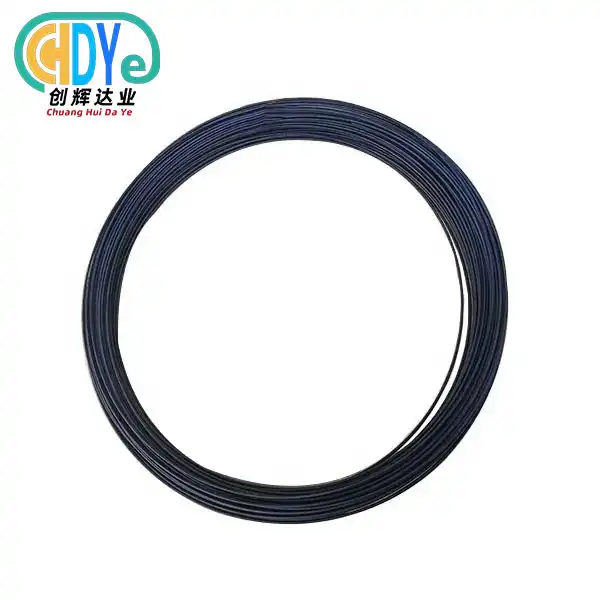
Our titanium alloy wire ranges from commercially pure titanium to high-strength aircraft alloys. Popular grades include Gr1, Gr2, Gr5 (Ti-6Al-4V), Gr7, Gr9, and medical-grade Ti-6Al-7Nb in sizes from 0.5mm to 4.0mm are in stock. Straight wire and coil configurations meet different application needs, while custom alloy creation allows for specific solutions.
Advanced manufacturing techniques guarantee high-quality materials and dimensions. We use vacuum arc remelting, precision wire drawing, controlled environment annealing, and extensive testing in our integrated production system. Automated laser measurement methods ensure ±0.01 mm diameter accuracy, while surface finishing ensures mirror-polished, oxide-free surfaces for optimal welding performance and electrical conductivity.
Our manufacturing processes include chemical analysis, mechanical property verification, and non-destructive evaluation to ensure quality. Material test certifications, traceability records, and compliance verification accompany each batch. ISO 9001:2015 certification shows systematic quality management that assures consistent material qualities and reliable performance.
Customer-Focused Service Excellence
Our service offers fast shipping, with common sizes available within 1-3 days from ready-to-ship inventories. An extended product range and flexible manufacturing provide 7-15 day lead times for conventional grades, while special specifications are prioritized to fulfill project deadlines. Free samples enable material and application testing before large-scale procurement.
Application engineering advice, material selection advice, and custom specification development are technical support services. Our skilled metallurgical team makes suggestions based on operating parameters, environmental conditions, and performance goals. This collaborative method optimizes material selection for project performance and cost management.
Conclusion
Selecting the best titanium alloy wire entails considering mechanical qualities, ambient conditions, and application needs. Understanding alloy grade differences, comparing performance to alternatives, and working with skilled suppliers who provide technical expertise and quality assurance are key to success. Titanium wire is ideal for aeronautical, medical, and industrial applications due to its high strength-to-weight ratio, corrosion resistance, and biocompatibility. Professional procurement methods, including supplier qualification, specification creation, and quality verification, promote project success while controlling costs and shipping times.
FAQ
Q: What factors influence the corrosion resistance of titanium wire?
A: Corrosion resistance in titanium wire depends primarily on alloy composition, surface condition, and environmental exposure. Pure titanium grades offer maximum corrosion resistance due to their stable oxide film formation, while alloyed grades may show slightly reduced resistance in specific environments. Palladium additions enhance resistance to reducing acids, while ruthenium improves performance in mixed oxidizing-reducing conditions. Surface finish quality affects corrosion initiation, with smooth, oxide-free surfaces providing superior resistance compared to rough or contaminated surfaces.
Q: How do I select the appropriate titanium alloy grade for aerospace applications?
A: Aerospace applications typically require Ti-6Al-4V (Grade 5) for structural components due to its excellent strength-to-weight ratio and proven service history. Critical rotating components may benefit from higher-strength alloys such as Ti-6Al-6V-2Sn or Ti-10V-2Fe-3Al. Material selection must consider operating temperature, stress levels, fatigue requirements, and environmental exposure. Compliance with aerospace material specifications, such as AMS standards, ensures material traceability and quality verification required for flight-critical applications.
Q: Can titanium wire be heat-treated to modify mechanical properties?
A: Alpha-beta titanium alloys like Ti-6Al-4V respond well to heat treatment for property optimization. Solution treating followed by aging can increase tensile strength significantly while maintaining adequate ductility. Stress relief annealing reduces residual stresses from cold working operations. However, commercially pure titanium grades show limited response to heat treatment, with annealing primarily serving to restore ductility after cold working. Heat treatment parameters must be carefully controlled to avoid oxidation and achieve target properties consistently.
Q: What quality certifications should I expect from titanium wire suppliers?
A: Professional titanium wire suppliers should maintain ISO 9001:2015 certification as a minimum quality management standard. Aerospace suppliers require AS9100 certification, while medical applications may need ISO 13485 compliance. Material certifications should include ASTM, AMS, or equivalent international standards compliance. Each shipment should include material test certificates documenting chemical composition, mechanical properties, and dimensional verification. Third-party testing capabilities and NADCAP accreditation indicate advanced quality management practices.
Q: How does wire diameter affect mechanical properties and applications?
A: Wire diameter significantly influences mechanical properties due to work hardening effects during drawing operations. Smaller diameters typically exhibit higher tensile strengths but reduced ductility compared to larger sizes. Surface-to-volume ratios increase with decreasing diameter, making smaller wires more sensitive to surface defects and environmental effects. Application suitability depends on strength requirements, formability needs, and handling considerations. Welding applications often prefer larger diameters for easier manipulation, while spring applications may benefit from the higher strength available in smaller sizes.
Partner with Chuanghui Daye for Superior Titanium Alloy Wire Solutions
Ready to elevate your project with premium titanium wire solutions?Shaanxi Chuanghui Daye delivers precision-engineered materials that meet the most demanding performance requirements. Our comprehensive inventory of titanium alloy wire grades, combined with rapid delivery capabilities and expert technical support, ensures your project success from specification through delivery. Whether you need standard grades for immediate shipment or custom alloy development for specialized applications, our ISO 9001:2015 certified facility provides the quality assurance and reliability you demand. Contact our titanium alloy wire manufacturer team at info@chdymetal.com to discuss your requirements and receive personalized technical consultation.
References
1. Boyer, R., Welsch, G., & Collings, E.W. "Materials Properties Handbook: Titanium Alloys." ASM International, Materials Park, OH, 1994.
2. Lutjering, G. & Williams, J.C. "Titanium: Engineering Materials and Processes." Springer-Verlag, Berlin Heidelberg, 2007.
3. Donachie, M.J. "Titanium: A Technical Guide, 2nd Edition." ASM International, Materials Park, OH, 2000.
4. Peters, M., Kumpfert, J., Ward, C.H., & Leyens, C. "Titanium Alloys for Aerospace Applications." Advanced Engineering Materials, Volume 5, Issue 6, 2003.
5. Rack, H.J. & Qazi, J.I. "Titanium alloys for biomedical applications." Materials Science and Engineering C, Volume 26, Issues 8, 2006.
6. Schutz, R.W. & Thomas, D.E. "Corrosion of titanium and titanium alloys." Metals Handbook Volume 13: Corrosion, ASM International, Materials Park, OH, 1987.

Learn about our latest products and discounts through SMS or email