- English
- French
- German
- Portuguese
- Spanish
- Russian
- Japanese
- Korean
- Arabic
- Greek
- German
- Turkish
- Italian
- Danish
- Romanian
- Indonesian
- Czech
- Afrikaans
- Swedish
- Polish
- Basque
- Catalan
- Esperanto
- Hindi
- Lao
- Albanian
- Amharic
- Armenian
- Azerbaijani
- Belarusian
- Bengali
- Bosnian
- Bulgarian
- Cebuano
- Chichewa
- Corsican
- Croatian
- Dutch
- Estonian
- Filipino
- Finnish
- Frisian
- Galician
- Georgian
- Gujarati
- Haitian
- Hausa
- Hawaiian
- Hebrew
- Hmong
- Hungarian
- Icelandic
- Igbo
- Javanese
- Kannada
- Kazakh
- Khmer
- Kurdish
- Kyrgyz
- Latin
- Latvian
- Lithuanian
- Luxembou..
- Macedonian
- Malagasy
- Malay
- Malayalam
- Maltese
- Maori
- Marathi
- Mongolian
- Burmese
- Nepali
- Norwegian
- Pashto
- Persian
- Punjabi
- Serbian
- Sesotho
- Sinhala
- Slovak
- Slovenian
- Somali
- Samoan
- Scots Gaelic
- Shona
- Sindhi
- Sundanese
- Swahili
- Tajik
- Tamil
- Telugu
- Thai
- Ukrainian
- Urdu
- Uzbek
- Vietnamese
- Welsh
- Xhosa
- Yiddish
- Yoruba
- Zulu
What Are the Mechanical Properties of Tantalum Rods?
Because they have unique mechanical qualities, tantalum rods are essential in harsh industrial settings. These high-performance refractory metals have great tensile strength, usually between 200 and 300 MPa when heated, great yield strength, usually between 140 and 240 MPa, great elongation values of between 20% and 40%, and great hardness, usually between 60 and 100 HV. Tantalum rods have a very high density of 16.65 g/cm³ and a melting point of 2,996°C. They are very strong, flexible, and resistant to corrosion, making them better than many other materials used in chemical processing, electronics manufacturing, and aerospace.
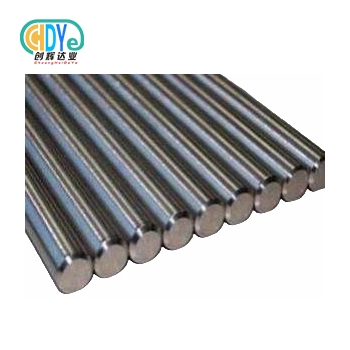
General Overview of Mechanical Properties of Tantalum Rods
Tensile Strength and Yield Characteristics
Tantalum's tensile strength changes a lot depending on how it was processed and what quality grade it is. Our high-purity tantalum bars, which are made with more than 99.95% Ta, work the same way mechanically across a range of diameters, from 2 mm to 100 mm. Tensile strength can go above 400 MPa when the material is cold-worked, but it stays at values that are good for making operations when it is annealed. Engineers can build parts with confidence because the yield strength, which is the stress level at which permanent deformation starts, stays the same across production batches.
Elongation and Ductility Properties
When compared to rigid refractory metals like tungsten, tantalum is very easy to shape. Elongation percentages show how much a material can stretch without breaking, which is a very important factor for both cutting and shaping. Tantalum that has been annealed has extension values that allow it to be deep drawn, bent, and used in other complex shaping operations without breaking. This trait is very helpful when making complicated parts like heat exchanger tubes, chemical reactor linings, and medical implant devices, where keeping the structure strong under stress is very important.
Hardness and Wear Resistance
Extremely hard materials like tungsten and carbide are harder than tantalum, but their hardness profile is good enough for most commercial uses. The Vickers hardness scale, which goes from 60 to 100 HV based on how it is processed, is a good compromise between how easy it is to work with and how long it lasts. When compared to harder refractory metals, this one's moderate hardness makes it easier to work with. It also keeps its shape and surface integrity, a tantalum rod, over time in corrosive settings.
Key Mechanical Properties Relevant to Specific Industries
Aerospace and Electronics Requirements
In order to make parts that are loaded and moved a lot, aerospace companies need materials that are strong for their weight and don't wear down quickly. Tantalum is heavier than titanium alloys because it has a density of 16.65 g/cm³. However, it is better at resisting corrosion and staying stable at high temperatures, which makes up for its weight when there are explosive propellants or big temperature changes. Tantalum is mostly used to make capacitors and blasting targets by electronics companies. The performance and reliability of these goods are directly related to how pure the material is and how stable its microstructure is.
Medical Industry Specifications
Manufacturers of medical devices choose tantalum for surgical tools and implants because it is very biocompatible and reliable mechanically. For orthopaedic implants to work, the materials used must have enough tensile strength to handle physiological loads while still being flexible enough to avoid putting stress on the bone tissue around the implant. When properly processed, tantalum rods have great elongation qualities that make it possible to make porous structures that help bone grow, which improves the long-term stability of implants and patient results.
Chemical Processing Demands
Chemical plants operating with aggressive acids, alkalis, and organic solvents benefit tremendously from tantalum's mechanical durability under corrosive attack. Unlike stainless steels that suffer stress corrosion cracking or pitting in certain environments, tantalum maintains its mechanical integrity even in boiling sulfuric acid or hydrochloric acid services. The naturally occurring pentoxide film on tantalum surfaces provides self-healing protection, ensuring that mechanical properties remain stable throughout extended service periods in reactors, heat exchangers, and piping systems.
Comparison of Mechanical Properties: Tantalum Rods vs Alternative Materials
Tantalum vs Niobium Properties
Niobium is next to tantalum in the periodic table and has some properties that are similar to tantalum. However, it is very different in how it behaves mechanically and how well it resists rust. Niobium has a slightly higher tensile strength in some processing settings, but it is not as resistant to most acids at high temperatures as tantalum. Niobium's mechanical qualities break down more quickly above 200°C in oxidising environments. This means it can't be used for chemical processing at high temperatures. Tantalum is usually chosen over niobium when corrosion of the tantalum rodprotection is the most important factor. Niobium may be sufficient in less harsh environments at a lower cost.
Tantalum vs Tungsten Trade-offs
Tungsten is very hard and stays strong even at very high temperatures, which makes it a better choice for some lighting and metalworking tasks. Compared to flexible tantalum, however, tungsten is very hard to shape and machine because it is so brittle. Even though tantalum isn't as strong as tungsten, engineers who are making parts with complicated geometries or cold-forming processes find it to be much better. Tantalum is very resistant to corrosion in chemical settings where tungsten would break down very quickly. This is another thing that makes these materials stand out when choosing which ones to use.
Tantalum vs Titanium Performance
Titanium alloys provide outstanding strength-to-weight ratios and good corrosion resistance across many industrial applications at considerably lower material costs than tantalum. The critical limitation of titanium involves its vulnerability to certain aggressive acids and high-temperature oxidising conditions, where tantalum demonstrates immunity. Chemical processing applications involving concentrated sulfuric acid, hydrofluoric acid, or chlorine-containing media at elevated temperatures demand tantalum's superior chemical inertness, justifying the premium material cost through extended component life and elimination of contamination risks.
Machining and Processing Impact on Mechanical Properties
Best Practices for Tantalum Machining
Tantalum rods are tough to work with because they move around a lot and get harder when they are cut. When you use sharp carbide or polycrystalline diamond tools, the cutting action stays clean and built-up edges don't form as much. This keeps the surface finish and measurements accurate. When cutting at a moderate speed and with enough coolant flow, the heat doesn't build up too much. If it did, it could change the microstructure of the area or leave behind tensile forces. The production team at Chuanghui Daye has learned how to use special machining settings over many years of working with refractory metals. This ensures that all forms and sizes of parts maintain consistent quality. It is easier to thread tantalum rod stock that has not been fully annealed than fully annealed material because it is less likely to gall. Tantalum that has been cold-worked is a little harder than tantalum that has been hot-worked. This makes it better at forming chips during thread cutting, while still being ductile enough to fit without breaking easily. Annealed material is better for parts that need to be soldered or bent in very specific ways because it makes the material more flexible and less likely to crack. It is softer, but it helps get the job done.
Post-Machining Heat Treatment Benefits
Stress relief annealing, which is done after machining, gets rid of any remaining stresses that might make the material less resistant to wear or less stable in its shape over time. Vacuum annealing at controlled temperatures between 900°C and 1,050°C for the right amount of time lets the stress relax without causing too much grain growth, which could weaken the material. After being machined, these parts are more reliable mechanically and behave more predictably under repeated loading conditions compared to parts that were machined without any locked-in stresses.
Avoiding Mechanical Property Degradation
Surface flaws caused by bad cutting, like microcracks, tool marks, or work-hardened layers, concentrate stress in places that shorten fatigue life and could lead to failure before its time. As part of quality control, the surface must be carefully inspected using the right tools, like liquid penetrant testing or eddy current examination, to find flaws that break the surface. By keeping the cutting parameters and tool state in good shape during production runs, metallurgical damage that weakens the tantalum material's natural mechanical properties is kept at bay.
Procurement Considerations for Mechanical Property Assurance
Supplier Certification and Quality Systems
ISO 9001:2015 certification provides baseline assurance of tantalum rodsystematic quality management, though additional industry-specific certifications may apply for aerospace, medical, or semiconductor applications. Supplier capabilities should encompass complete traceability from raw material sourcing through final inspection, with documented quality control procedures at each production stage. At Chuanghui Daye, our ISO 9001:2015 certified quality management system ensures rigorous control throughout melting, forging, rolling, machining, and inspection operations, delivering consistent product quality that meets international standards.
Mechanical Test Report Requirements
Full mechanical test reports list the values for tensile strength, yield strength, elongation, and hardness for every production lot. These reports show that the materials meet the standards that were set. For example, ASTM E8 should be used for tensile qualities, and ASTM E92 should be used for measuring Vickers hardness. Spectroscopic analysis of the chemical composition proves the purity grade and finds any unexpected alloying elements that could affect performance. Instead of just accepting mill certificates without checking them, the requirements for the purchase should make it clear that these certifications are needed and set criteria for acceptance based on the needs of the application.
Custom Specifications and Early Engagement
Including suppliers in the design process lets everyone work together to come up with the best material requirements, processing routes, and quality control methods. Before committing to full-scale orders, making prototypes and trying them mechanically is a good way to make sure that complex parts meet specifications and work as expected. If you need a custom diameter, special heat treatment conditions, or an improved surface finish, you need to be able to communicate clearly. You may also need to work on process development, which can affect wait times and prices.
Conclusion
Tantalum rods are strong mechanically, with high tensile strength, good ductility, and high hardness. This makes them effective in many tough industrial settings. Tantalum rods are the best material to use when a part breaking could have bad results because they are very reliable mechanically and do not rust. Experts in purchasing can pick the best materials for the job if they know how different levels of purity, heat treatment conditions, and manufacturing routes change the way the material works physically. To find products, you need to carefully examine suppliers, make sure that needs are communicated clearly, and look over quality documentation to ensure that the products you receive meet high standards of performance. When you buy things in a strategic way, you lower the chance of not getting these important speciality materials and set up reliable supply lines.
FAQ
1. What tensile strength can I expect from high-purity tantalum rods?
High-purity tantalum rods with Ta content exceeding 99.95% typically exhibit tensile strength ranging from 200 to 300 MPa in the annealed condition. Cold-worked material demonstrates significantly higher strength, often exceeding 400 MPa, though with reduced ductility. The specific tensile strength depends on processing history, grain size, and purity level, with electron beam melted and powder metallurgy routes producing slightly different characteristics.
2. How does heat treatment affect tantalum's mechanical properties?
Annealing processes conducted at temperatures between 900°C and 1,200°C in vacuum or inert atmosphere significantly enhance ductility and elongation while reducing tensile strength compared to cold-worked conditions. This thermal treatment relieves internal stresses, promotes grain growth, and optimises the balance between strength and formability. Stress relief annealing at lower temperatures preserves more strength while eliminating residual stresses from machining operations.
3. Can tantalum rods be machined without degrading mechanical properties?
Proper machining practices using sharp tooling, moderate cutting speeds, and adequate cooling preserve the inherent mechanical properties of tantalum rods. Post-machining stress relief annealing can restore optimal mechanical characteristics if work hardening or residual stresses develop during fabrication. Avoiding surface defects and controlling cutting parameters prevents metallurgical damage that might compromise fatigue resistance or dimensional stability.
Partner with Chuanghui Daye for Premium Tantalum Rod Supply
Shaanxi Chuanghui Daye stands as your trusted tantalum rod manufacturer with over 30 years of rare metal industry expertise, delivering high-purity products that consistently meet demanding mechanical property specifications. Our ISO 9001:2015 certified manufacturing facility in China's Titanium Capital combines advanced vacuum melting, precision machining, and rigorous quality control to produce tantalum rods from 2 to 100 mm in diameter with guaranteed purity exceeding 99.95%. We provide complete traceability documentation, detailed mechanical test reports, and flexible custom processing services tailored to your exact requirements across chemical processing, electronics manufacturing, medical devices, and aerospace applications. Contact our technical team at info@chdymetal.com to discuss your specific needs, request samples, or receive competitive quotations from a reliable tantalum rod supplier committed to quality, consistency, and responsive service.
References
1. Davis, J.R. (Ed.). "Refractory Metals and Alloys: Properties, Selection, and Applications." ASM International Handbook Committee, ASM International, 1993.
2. Shields, J.A. "Applications of Molybdenum Metal and Its Alloys." International Molybdenum Association, London, 2013.
3. Yih, S.W.H. and Wang, C.T. "Tungsten: Sources, Metallurgy, Properties, and Applications." Plenum Press, New York, 1979.
4. Cardonne, S.M., Kumar, P., Michaluk, C.A., and Schwartz, H.D. "Tantalum and Its Alloys." International Journal of Refractory Metals and Hard Materials, Vol. 13, No. 4, 1995, pp. 187-194.
5. Mathaudhu, S.N. and Hartwig, K.T. "Grain Refinement and Recrystallisation of Heavily Worked Tantalum." Materials Science and Engineering A, Vol. 426, 2006, pp. 128-142.
6. Miller, G.L. "Tantalum and Niobium: Metallurgy, Processing, and Applications." Butterworths Scientific Publications, London, 1959.

Learn about our latest products and discounts through SMS or email