- English
- French
- German
- Portuguese
- Spanish
- Russian
- Japanese
- Korean
- Arabic
- Greek
- German
- Turkish
- Italian
- Danish
- Romanian
- Indonesian
- Czech
- Afrikaans
- Swedish
- Polish
- Basque
- Catalan
- Esperanto
- Hindi
- Lao
- Albanian
- Amharic
- Armenian
- Azerbaijani
- Belarusian
- Bengali
- Bosnian
- Bulgarian
- Cebuano
- Chichewa
- Corsican
- Croatian
- Dutch
- Estonian
- Filipino
- Finnish
- Frisian
- Galician
- Georgian
- Gujarati
- Haitian
- Hausa
- Hawaiian
- Hebrew
- Hmong
- Hungarian
- Icelandic
- Igbo
- Javanese
- Kannada
- Kazakh
- Khmer
- Kurdish
- Kyrgyz
- Latin
- Latvian
- Lithuanian
- Luxembou..
- Macedonian
- Malagasy
- Malay
- Malayalam
- Maltese
- Maori
- Marathi
- Mongolian
- Burmese
- Nepali
- Norwegian
- Pashto
- Persian
- Punjabi
- Serbian
- Sesotho
- Sinhala
- Slovak
- Slovenian
- Somali
- Samoan
- Scots Gaelic
- Shona
- Sindhi
- Sundanese
- Swahili
- Tajik
- Tamil
- Telugu
- Thai
- Ukrainian
- Urdu
- Uzbek
- Vietnamese
- Welsh
- Xhosa
- Yiddish
- Yoruba
- Zulu
What Are Titanium Fasteners Used For in Engineering?
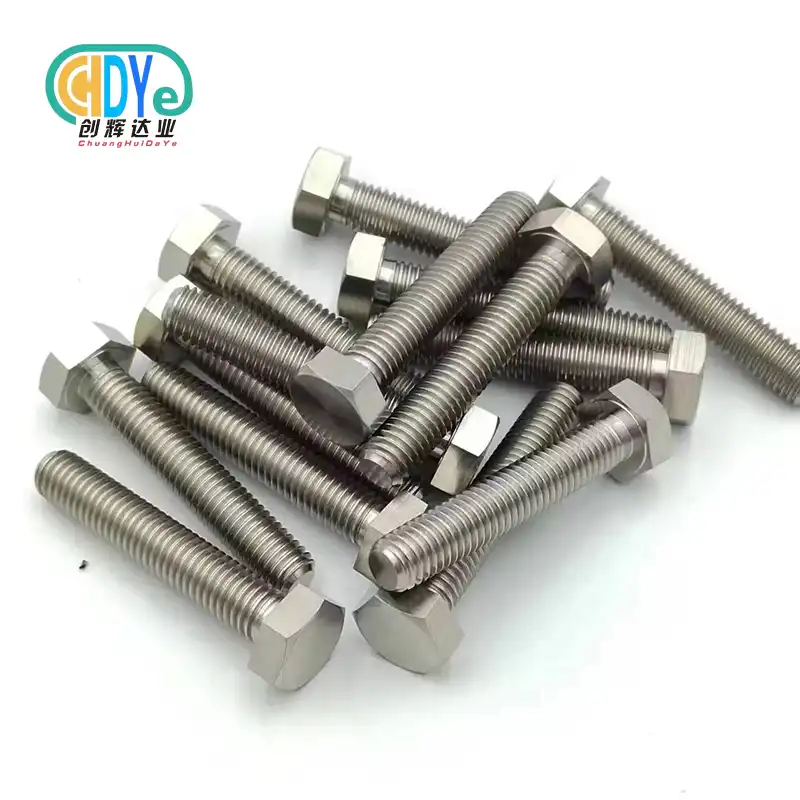
Titanium fasteners are important parts in many areas of engineering because they have the best strength-to-weight ratios and are very resistant to corrosion in harsh industrial settings. These precisely designed hardware solutions, which include nuts, bolts, washers, and screws, make connections in aerospace structures, chemical processing equipment, marine vessels, and medical devices that are reliable even when standard materials don't work well enough.
Understanding Titanium Fasteners and Their Mechanical Properties
Titanium fasteners are a special kind of hardware part made from titanium and its alloys. They give engineers performance benefits in tough environments that have never been seen before. There are many different types of fastening options, such as bolts, screws, nuts, washers, threaded rods, studs, and anchors. Each type is made to meet specific mechanical and environmental needs.
Material Grades and Specifications
Titanium grades Review 1 (Gr1), Review 2 (Gr2), and Review 5 (Gr5) are the most common ones utilized to make a clasp. Each has its own special mechanical qualities that make it perfect for diverse employments. Review 1 titanium is incredible for chemical preparation settings since it doesn't rust and is simple to shape. In spite of the fact that Review 2 is more grounded than Review 1, it is still exceptionally simple to weld and shape. Review 5, also called Ti-6Al-4V, is the best review of commercially unadulterated titanium for aircraft and high-performance applications since it has the most noteworthy strength-to-weight ratio.
These clamps are made to meet outside guidelines like GB, Commotion, and ISO, which implies they are dependable and consistent all over the world. They come in sizes from M2 to M25 and can be cut to any length, so they can meet a wide range of specialized needs, while still assembly tall quality measures.
Manufacturing Excellence and Quality Control
Utilizing cutting-edge metallurgical strategies, titanium screws are made through complex fabrication and machining processes. Exactness fashioning, computer-controlled machining, and uncommon warm treatment strategies make it beyond any doubt that the mechanical qualities and measurements are idealized. Amid the whole fabrication process, quality control measures ensure beyond any doubt that each latch meets strict execution guidelines. Exhaustive testing strategies affirm the fasteners' quality, resistance to erosion, and dimensional exactness.
The Key Applications of Titanium Fasteners in Engineering
There are many engineering uses for titanium fasteners in many different fields. Their special mix of qualities solves important performance problems that regular materials can't solve well.
Aerospace and Defense Applications
Titanium clamps are utilized extensively in the aviation industry for building airframes, motor parts, and basic assemblies. Weight diminishment is still exceptionally vital in plane design, and titanium latches can save up to 40% of the weight of steel reciprocals, while still being more robust. Extraordinary temperature changes, from below zero at tall heights to tall temperatures close to motor compartments, do not influence the basic steadiness of these fasteners.
Military flying machines, maritime vessels, and armored vehicles are all illustrations of defense applications where steadfastness in the fight is exceptionally critical. Titanium is nonmagnetic, so it doesn't interfere with delicate gadgets and navigational equipment. It's moreover safe to erosion, so it will work well for a long time in difficult working conditions.
Chemical and Petrochemical Industries
Titanium screws are utilized in hardware in chemical handling plants that are exposed to unforgiving chemicals, high temperatures, and destructive climates. Typical steel screws would break down rapidly in these conditions, which may cause hardware to fail and pose security dangers. Titanium is utilized in reactor vessels, warm trades, and channeling frameworks since it is exceptionally resistant to acids, antacids, and chloride solutions.
Titanium latches are valuable for petrochemical plants that utilize seaward stages and coastal offices that are always at chance of erosion from saltwater. Marine situations can harm gear, but keeping its mechanical properties can make it last longer and require less upkeep.
Medical Device Manufacturing
For medical devices, biocompatible materials are needed that can safely bond with human flesh and still work well mechanically. Titanium screws perfectly meet these needs because they are non-allergenic and non-toxic, which are important qualities for surgical implants and prosthetic devices. Titanium fasteners make sure that patients are safe and that implants work well for a long time in orthopedic implants, dental fixtures, and surgical tools.
Titanium is not magnetic, so people with titanium implants can safely go through MRI procedures. This takes away any worries about compatibility that come up with ferromagnetic materials.
Titanium Fasteners vs. Other Metal Fasteners — A Comparative Analysis
By learning about the changes in performance between titanium and other fastener materials, engineers can make smart choices for specific tasks.
Performance Comparison with Steel and Stainless Steel
While steel fasteners are cheaper at first, titanium fasteners are a better buy in the long run because they don't need as much upkeep and last longer. In corrosive settings, steel fasteners need protective coatings and are often replaced. Titanium fasteners, on the other hand, don't need any extra protection to stay strong. Titanium's strength-to-weight ratio is much higher than steel's, which means that structures can be made lighter without sacrificing safety.
Stainless steel fasteners are better than carbon steel at resisting corrosion, but they are still not as good as titanium in harsh chemical conditions. Titanium's passive oxide layer protects itself in a way that stainless steel can't, especially in places with a lot of chloride, where pitting rust is a problem.
Economic Considerations and Lifecycle Costs
Titanium fasteners have a higher initial cost, which worries procurement professionals. However, lifecycle research shows that they have big economic benefits. The higher prices for longer operational times were balanced out by fewer maintenance schedules, no longer having to pay for replacement parts, and more reliable equipment. Titanium is very reliable, which is especially helpful in industries that need to be very safe because broken equipment costs a lot in terms of both liability and running costs.
When you reduce the weight of mobile applications like automotive and aerospace systems, you save energy. This saves money because you use less fuel and have lower running costs.
Procurement Insights — How to Source Quality Titanium Fasteners?
To get the best performance and value from titanium fasteners, you need to carefully look at suppliers, quality certifications, and technical specs.
Supplier Qualification and Certification Requirements
Suppliers of high-quality titanium fasteners keep their ISO 9001:2015 certification, which shows that they are committed to consistent quality management practices. ASTM compliance makes sure that the properties of the material meet international standards, and traceability paperwork shows the whole history of the material, from the raw titanium to the final inspection. For each batch they send, suppliers should give material test certificates, reports on dimensional inspection, and proof that the materials are resistant to corrosion.
The efficiency of the supply chain is affected by geography. Suppliers located in areas that are already known for making titanium have benefits when it comes to getting materials, having technical knowledge, and having enough production capacity. China's "Titanium Capital" in Baoji, Shaanxi Province, is one place where a lot of specialized manufacturing skills and technical know-how are gathered.
Custom Solutions and Technical Support
Leading providers can make custom fasteners that fit the needs of any application. These can have non-standard sizes, special alloy compositions, or special surface treatments. Technical support services help engineers choose the right materials, make the best use of them, and test their performance, making sure that the fastener specs match the needs of the operation.
Deals for buying in bulk can save you money on big projects while keeping quality standards unchanged. Different needs for handling and storing items along the supply chain can be met by a variety of flexible packaging choices, such as standard cartons and custom protective containers.
Company Introduction and Product Service Overview
Shaanxi Chuanghui Daye Metal Material Co., Ltd. is one of the best companies that makes titanium fasteners. They have more than 30 years of experience working and making things out of rare metals. Because our company is in the Baoji High-tech Development Zone, which is in China's famous "Titanium Capital," we have access to a lot of technical tools and well-established industrial infrastructure.
When it comes to hardware solutions for current engineering tasks, our titanium fastener product line has everything you need. High-quality Gr1, Gr2, and Gr5 titanium alloys are used to make standard items like bolts, nuts, screws, washers, threaded rods, studs, and pins. Custom options are available in sizes ranging from M2 to M25 and can be made to fit any length requirement.
Quality management with ISO 9001:2015 approval makes sure that products are always of the highest quality, from checking the raw materials to delivering them. Modern tools for making things, like electron beam furnaces, precision lathes, and specialty rolling machines, allow for precise measurements and high-quality finishes on the outside. Every production batch is checked for mechanical properties, resistance to corrosion, and accuracy in measurements using thorough testing methods.
We can offer a wide range of industries around the world, such as aerospace, chemical processing, marine engineering, medical devices, and research institutions. Technical support services help customers choose the right materials, make the best use of them, and check the quality of the products they buy, so they work at their best in tough operational settings.
Conclusion
Titanium fasteners are important parts for engineering projects that need high strength-to-weight ratios, great corrosion resistance, and solid long-term performance. They are used in many important fields, like aerospace, military, chemical processing, and medical devices, where regular materials can't meet the strict needs of the job. Lifecycle study shows that there are big economic benefits through less maintenance, longer service life, and better system reliability, even though the starting costs are higher than those of traditional fasteners. To make sure the application works at its best, suppliers must be carefully evaluated, quality certifications must be checked, and technical help must be provided.
FAQ
Q: Are titanium fasteners cost-effective despite higher initial prices?
A: Titanium fasteners provide excellent cost-effectiveness when evaluated over their complete lifecycle. While initial purchase prices exceed those of steel or stainless steel alternatives, the extended service life, reduced maintenance requirements, and elimination of replacement costs create substantial long-term savings. Industries operating in corrosive environments particularly benefit from titanium's durability, as conventional fasteners require frequent replacement and associated downtime costs.
Q: Which titanium grade offers the best performance for high-temperature applications?
A: Grade 5 titanium (Ti-6Al-4V) provides optimal performance for high-temperature applications, maintaining mechanical properties at temperatures up to 600°C while offering the highest strength-to-weight ratio among commercially available titanium alloys. This grade combines excellent thermal stability with superior corrosion resistance, making it ideal for aerospace, automotive, and chemical processing applications operating under elevated temperature conditions.
Q: How can I verify the authenticity and quality of titanium fasteners?
A: Authentic titanium fasteners should include comprehensive material test certificates, traceability documentation, and compliance verification with relevant international standards such as ASTM, ISO, or DIN specifications. Reputable suppliers provide detailed chemical analysis reports, mechanical property test results, and dimensional inspection certificates for each production batch. ISO 9001:2015 certification indicates established quality management systems, while third-party testing verification ensures independent quality validation.
Partner with Chuanghui Daye for Premium Titanium Fastener Solutions
Shaanxi Chuanghui Daye offers comprehensive titanium fastener manufacturing solutions backed by three decades of industry expertise and ISO 9001:2015 quality certification. Our specialized product range meets diverse engineering requirements with custom solutions available for unique applications. Contact our technical team at info@chdymetal.com to discuss your titanium fastener supplier needs and receive detailed quotations for standard or custom fastener specifications. We provide complete documentation, competitive factory-direct pricing, and reliable global delivery to support your critical engineering projects.
References
1. Boyer, R. R. "An Overview on the Use of Titanium in the Aerospace Industry." Materials Science and Engineering: A, vol. 213, 1996, pp. 103-114.
2. Donachie, Matthew J. "Titanium: A Technical Guide, 2nd Edition." ASM International, Materials Park, Ohio, 2000.
3. Lutjering, G. and Williams, J. C. "Titanium Engineering Materials and Applications." Springer-Verlag, Berlin, 2007.
4. Schutz, R. W. "Corrosion of Titanium and Titanium Alloys in Industrial Applications." Handbook of Environmental Degradation of Materials, William Andrew Publishing, 2018.
5. Peters, M. and Leyens, C. "Titanium and Titanium Alloys: Fundamentals and Applications." Wiley-VCH, Weinheim, Germany, 2003.
6. American Society for Testing and Materials. "Standard Specification for Titanium and Titanium Alloy Fasteners." ASTM F467-18, West Conshohocken, PA, 2018.
Learn about our latest products and discounts through SMS or email