- English
- French
- German
- Portuguese
- Spanish
- Russian
- Japanese
- Korean
- Arabic
- Greek
- German
- Turkish
- Italian
- Danish
- Romanian
- Indonesian
- Czech
- Afrikaans
- Swedish
- Polish
- Basque
- Catalan
- Esperanto
- Hindi
- Lao
- Albanian
- Amharic
- Armenian
- Azerbaijani
- Belarusian
- Bengali
- Bosnian
- Bulgarian
- Cebuano
- Chichewa
- Corsican
- Croatian
- Dutch
- Estonian
- Filipino
- Finnish
- Frisian
- Galician
- Georgian
- Gujarati
- Haitian
- Hausa
- Hawaiian
- Hebrew
- Hmong
- Hungarian
- Icelandic
- Igbo
- Javanese
- Kannada
- Kazakh
- Khmer
- Kurdish
- Kyrgyz
- Latin
- Latvian
- Lithuanian
- Luxembou..
- Macedonian
- Malagasy
- Malay
- Malayalam
- Maltese
- Maori
- Marathi
- Mongolian
- Burmese
- Nepali
- Norwegian
- Pashto
- Persian
- Punjabi
- Serbian
- Sesotho
- Sinhala
- Slovak
- Slovenian
- Somali
- Samoan
- Scots Gaelic
- Shona
- Sindhi
- Sundanese
- Swahili
- Tajik
- Tamil
- Telugu
- Thai
- Ukrainian
- Urdu
- Uzbek
- Vietnamese
- Welsh
- Xhosa
- Yiddish
- Yoruba
- Zulu
Which Pure Niobium Plate Certifications Matter for Quality Control?
For essential industrial applications, when you need niobium sheet metal, certificates are not simply paperwork – they are performance guarantees. If you are a procurement specialist, the correct certifications on a pure niobium plate will certify the purity level, prove the production process is consistent, and safeguard your supply chain from expensive non-conformance occurrences. Knowing which certifications really count – from ASTM B393 material compliance to ISO 9001:2015 quality management supervision – may help you make quicker, wiser sourcing selections across aerospace, chemical processing and electronics applications.
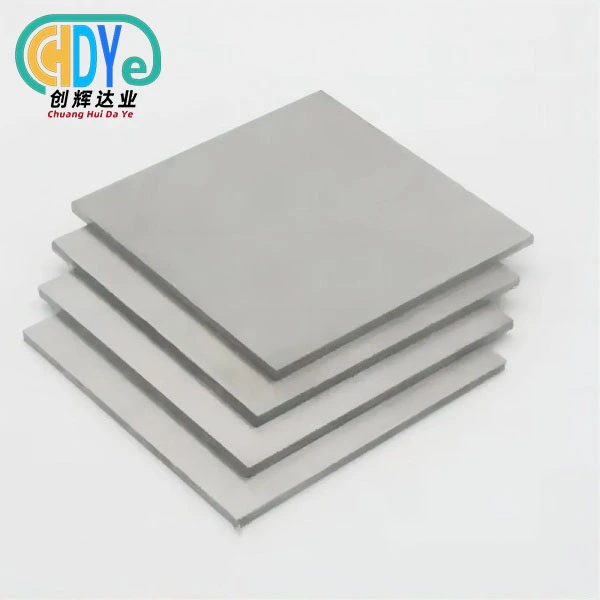
Understanding Pure Niobium Plate Quality Requirements
Niobium is a refractory metal with a melting point of about 2,468°C and a density of 8.57 g/cm³. The physical properties make it very appropriate for high-temperature conditions and exposure to corrosive chemicals. However, the performance of the raw material is strongly dependent on the management of purity and microstructure throughout the production process.
Why Purity Thresholds Define Performance
Oxygen levels exceeding 150 ppm significantly degrade the ductility and Residual Resistance Ratio (RRR) values. Embrittlement due to hydrogen pollution. These interstitial impurities are imperceptible to the human eye, but in service they might threaten the structural integrity. For this reason, high-quality niobium plate vendors provide purity grades of 99.9% (3N), 99.95%, and 99.99% (4N), supporting each grade with verified test results from Inert Gas Fusion (IGF) analysis.
Microstructure and Dimensional Precision
Metallographic examination must verify a totally recrystallized grain structure of generally ASTM E112 No. 6 or finer. Surface flaws in deep drawing due to inhomogeneous grain development. Also, dimensional tolerances are of importance: Plates manufactured with thicknesses from 0.5 mm to 50 mm, widths up to 1,000 mm and lengths up to 3,000 mm must have a strictly regulated surface flatness and roughness (Ra < 0.8 µm for vacuum applications). Without approved verification at each level, all the risk is on the purchasers.
Overview of Essential Certifications for Pure Niobium Plates
Certifications are a standardized language between customer and supplier. They transform complicated metal needs into verifiable and auditable promises. Here are the key certification categories that really secure your procurement of pure niobium plate:
- ASTM B393 – This is the principal material standard for flat-rolled products of unalloyed niobium. It specifies two grades, Type 1 (RO4200, Reactor Grade with tightly regulated tantalum impurities) and Type 2 (RO4210, Commercial Grade for chemical processing and wide industrial application). ASTM B393 compliance provides customers with a guarantee of chemical composition, mechanical properties (such as tensile strength of 200 to 350 MPa), and inspection methods, which serve as a valid baseline against which each lot may be compared.
- ISO 9001:2015 — This quality management system certification covers the whole manufacturing process, from raw material inspection to vacuum melting, rolling, heat treating, and final dimensional verification. If you require comprehensive material documentation for regulated end-use settings, suppliers with ISO 9001:2015 certification have documented process control and traceability, which is critical.
- RoHS and REACH Compliance – Environmental compliance is not an option for customers selling completed components into North American or European markets. RoHS limits hazardous compounds in electrical and electronic devices while REACH regulates chemical safety in the supply chain. Certified conformity with both standards lowers regulatory risk and allows easier customs clearance.
These certifications together cover the whole range of quality – material composition, integrity of the manufacturing process, and environmental responsibility. Together they provide a full verification methodology that procurement teams may use during supplier qualification checks.
Certification Impact on Niobium Plate Performance and Procurement
Certified niobium items provide real performance benefits compared to uncertified ones. The natural surface passivation layer of Nb2O5 offers strong resistance to nitric acid, hydrochloric acid, and most oxidizing conditions. The certified plates indicate that corrosion resistance is repeatable from batch to batch, not random.
A strong commitment to certification guarantees traceability from the source of the ingot to the final inspection. Traceability helps engineers to swiftly pinpoint the reason of a component failure in service, saving downtime and liability. For chemical processing equipment linings or aircraft shielding applications where failure implications are severe, traceability data is as important as the material itself. Pure niobium plate supply chain transparency also mitigates the danger of getting counterfeit or misrepresented items. When a supplier can offer legitimate ASTM B393 mill test records, coupled with ISO 9001:2015 certification, customers have a defensible audit trail that will satisfy both internal quality teams and external regulatory authorities.
Comparing Certified Niobium Plates with Other Metals and Alloys
Pure niobium fills a performance niche that neither titanium nor stainless steel can. It has a density of 8.57 g/cm3, which is lower than tantalum (16.65 g/cm3) and provides considerable weight savings for structural applications. Its coefficient of thermal expansion of 7.3 µm/(m·K) offers compatibility with surrounding materials in precision systems where dimensional stability during thermal cycling is crucial.
Niobium alloys are stronger, but the variation in composition means they have different certification requirements. Titanium is its own metal in many corrosive situations, but niobium can beat it in certain hot mineral acid processing applications. Stainless steel is not chemically inert enough to be used in direct contact with reducing acids at high temperatures. These certified pure niobium plates, verified to ASTM B393 standards, bridge this gap with proven, repeatable performance that alloys or replacement metals just cannot match in certain application settings.
How to Choose and Verify Niobium Plate Certifications When Sourcing
Of course, obtaining a reliable vendor is not just a matter of checking over a product datasheet. I would advocate the use of a formal checklist for the evaluation of a pure niobium plate source:
- Material standard compliance: The mill certificate should specifically specify ASTM B393 Type 1 or Type 2 classification with chemical composition analysis from a certified testing laboratory.
- Certification of quality management: Please ask for the current ISO 9001:2015 certificate with a valid expiration date and scope statement covering the manufacturing processes relevant to your purchase.
- Environmental declarations: RoHS/REACH compliance paperwork should be available if your downstream use case includes electronic or medical parts.
- Non-destructive testing records: For each shipment, ultrasonic testing reports for internal lamination detection and surface inspection data for Ra values shall accompany the cargo.
- Vacuum Annealing Records: For highly cold-worked material, ensure that stress-relief annealing has been conducted and recorded at 1000-1200C in a high vacuum environment (10-4 Torr or greater).
Such papers need to be checked, too. Where feasible, cross-reference certificate numbers to issuing agencies and seek lot-specific traceability rather than general product data. Suppliers not ready to provide lot-level evidence should be rejected from important procurement decisions.
Conclusion
Certifications are not a formality; they represent the operational backbone of quality control in the niobium procurement process. Material must be as defined in ASTM B393. ISO 9001:2015 describes the way it must be done. Where it can go is defined by RoHS and REACH. Together, they provide a traceable quality chain, protecting purchasers against bad quality products, regulatory exposure, and surprises in the supply chain. For every qualified supplier assessment, these credentials are the beginning point for all procurement professionals procuring pure niobium plate for aerospace, chemical, or advanced manufacturing applications.
FAQ
Q: What is the difference between ASTM B393 Type 1 and Type 2 niobium plate?
A: ASTM B393 Type 1 (RO4200) is Reactor Grade, with tightly controlled tantalum impurity levels for nuclear and energy applications. Type 2 (RO4210) is Commercial Grade, where higher tantalum content is acceptable, making it more cost-effective for chemical processing and general industrial use.
Q: Does ISO 9001:2015 certification guarantee material purity?
A: ISO 9001:2015 certifies the quality management process, not a specific material value. However, it mandates documented incoming material inspection and traceability, which indirectly ensures that purity claims are verified and recorded throughout production.
Q: Can niobium plate be welded without inert gas shielding?
A: Niobium absorbs oxygen and nitrogen aggressively above 200°C. Welding must be performed in an electron beam chamber under high vacuum or within an inert gas (argon or helium) glove box. Open-air welding will cause embrittlement and immediate material degradation.
Q: Why does RRR value appear in high-purity niobium specifications?
A: The Residual Resistance Ratio measures purity relative to electron scattering at cryogenic temperatures. A high RRR value confirms minimal impurity interference with thermal conductivity—a mandatory specification for superconducting RF cavity applications in particle accelerators.
Request a Certified Niobium Plate Quote from Chuanghui Daye
Shaanxi Chuanghui Daye is a trusted pure niobium plate manufacturer with over 30 years of rare metal expertise, ISO 9001:2015 certification, and factory-direct pricing. We supply commercial, high-purity, and ultra-high-purity grades (99.9%–99.99%) with full mill certifications and ASTM B393 compliance. Contact our technical team at info@chdymetal.com to request a quote or material datasheet for your next project.
References
1. ASTM International. ASTM B393: Standard Specification for Niobium and Niobium Alloy Strip, Sheet, and Plate. ASTM International, 2019.
2. ASM International. ASM Handbook, Volume 2: Properties and Selection—Nonferrous Alloys and Special-Purpose Materials. ASM International, 1990.
3. International Organization for Standardization. ISO 9001:2015 Quality Management Systems—Requirements. ISO, 2015.
4. Cardarelli, François. Materials Handbook: A Concise Desktop Reference. Springer, 2018.
5. Hebda, John. "Niobium Alloys and High Temperature Applications." CBMM Technical Report, 2001.
6. European Chemicals Agency. REACH Regulation: Understanding the Requirements for Chemical Substances in Industrial Supply Chains. ECHA, 2020.
Learn about our latest products and discounts through SMS or email